

In an age of increasing access to a plethora of online learning options, many students of yoga are leaning towards online or hybrid yoga teacher trainings instead of a traditional face-to-face offering, and there are several attractions.
Online learning has no physical boundaries and opens the possibility of studying with some of the world’s most renowned yoga teachers. It is often suits more budget conscious students or provides more flexibility to study at your own pace. Or it may seem like a quicker and easier route to certification than 200 hours of real face time in a classroom setting.
Online learning undoubtedly has a role to play in the yoga ‘industry’ - but therein lies the issue. The wisdom of yoga that was traditionally handed down over many years or even decades through an enduring student/teacher relationship, has now become commercialised and commoditised into bite-size modules in an online package.
Enrolling in a face-to-face yoga teacher training may seem like a major commitment of time and money, but it offers profound benefits that an online course simply can't replicate.
Sharing lived experience & wisdom
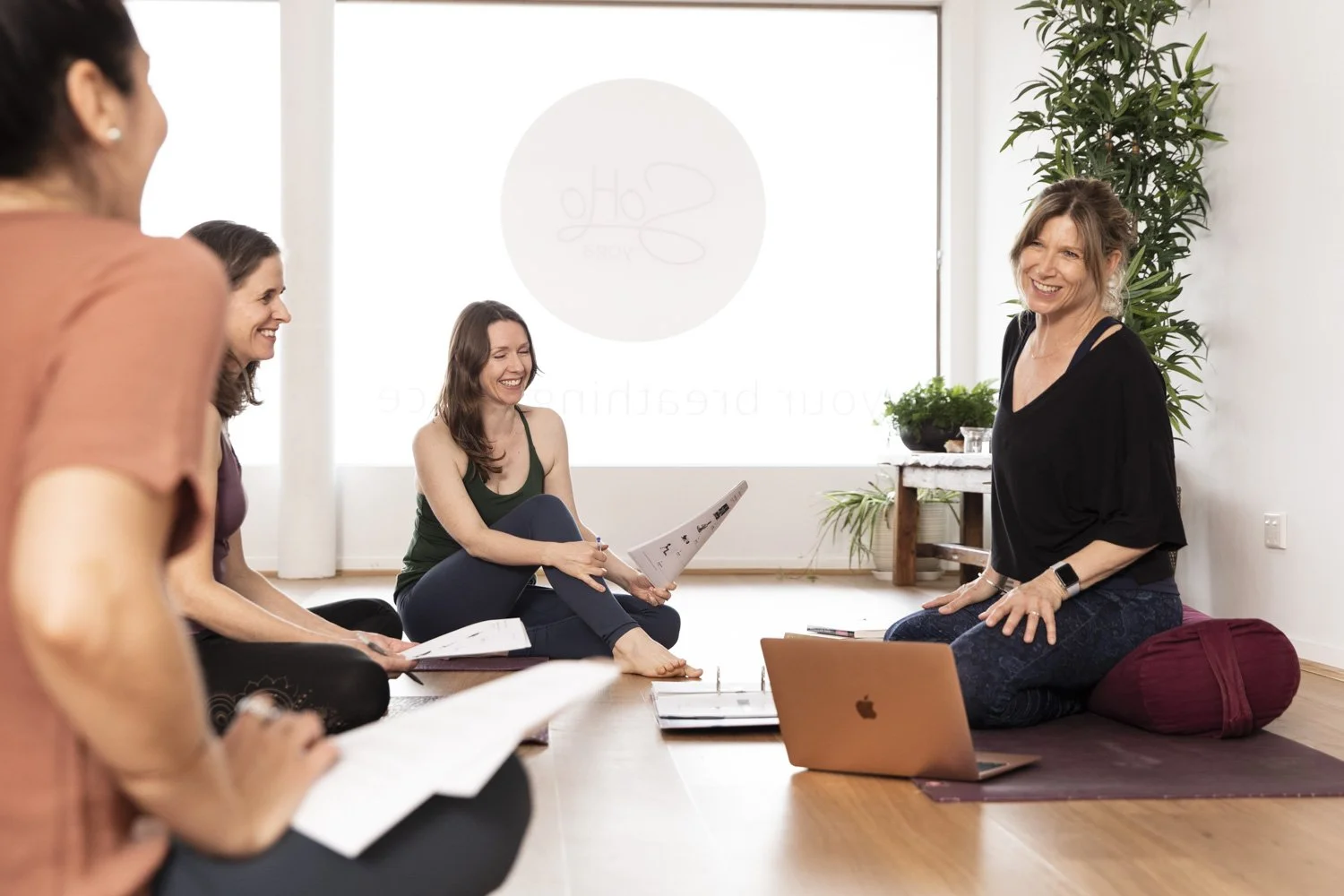
The practice of yoga is so much more than the physical postures or ‘asanas’ that most students are familiar with. The wisdom of yoga dates back at least 2,500 years. It is a philosophy and a practice that is taught and learned from lived experience, and there is a wealth of difference between a physical yoga instructor and a true yoga teacher.
Like any philosophy, the complex teachings of yoga are not meant to be passively consumed; they are meant to be discussed, questioned, and explored. In a classroom setting there is time and space to share thoughts and experiences and seek clarification, not only from an experienced teacher, but also from the collective group, making the learning experience more enjoyable and memorable.
2. Social engagement & support network
In an age of increasing social isolation and associated declines in mental-health, an in-person yoga teacher training immerses you in an all-important, vibrant, supportive community. This communal environment reduces the isolation that can come with self-study and provides a safe space for vulnerability and personal expression, which are vital components of mental well-being.
The act of learning and practicing alongside peers also fosters a sense of belonging and camaraderie. Social engagement in a classroom setting activates the brain's reward centres, releasing feel-good neurochemicals like oxytocin and dopamine. These chemicals not only reduce stress but also strengthen social bonds, and this shared journey creates a support network that extends far beyond the duration of the course.
3. Motivation & accountability
Self-paced online learning may (at first) seem better value or more flexible, but let’s be honest, how many of us have enrolled for an online course with good intentions and never completed or even started it? Where’s the value in that?
The accountability of a face-to-face schedule is a motivator to create time and space in your life to immerse yourself in your studies, helping you stay committed to the course and to your personal growth. Dedicating this time to yourself is a radical act of self-care and the rewards are transformational. You won’t be disappointed.
4. Immediate and insightful feedback
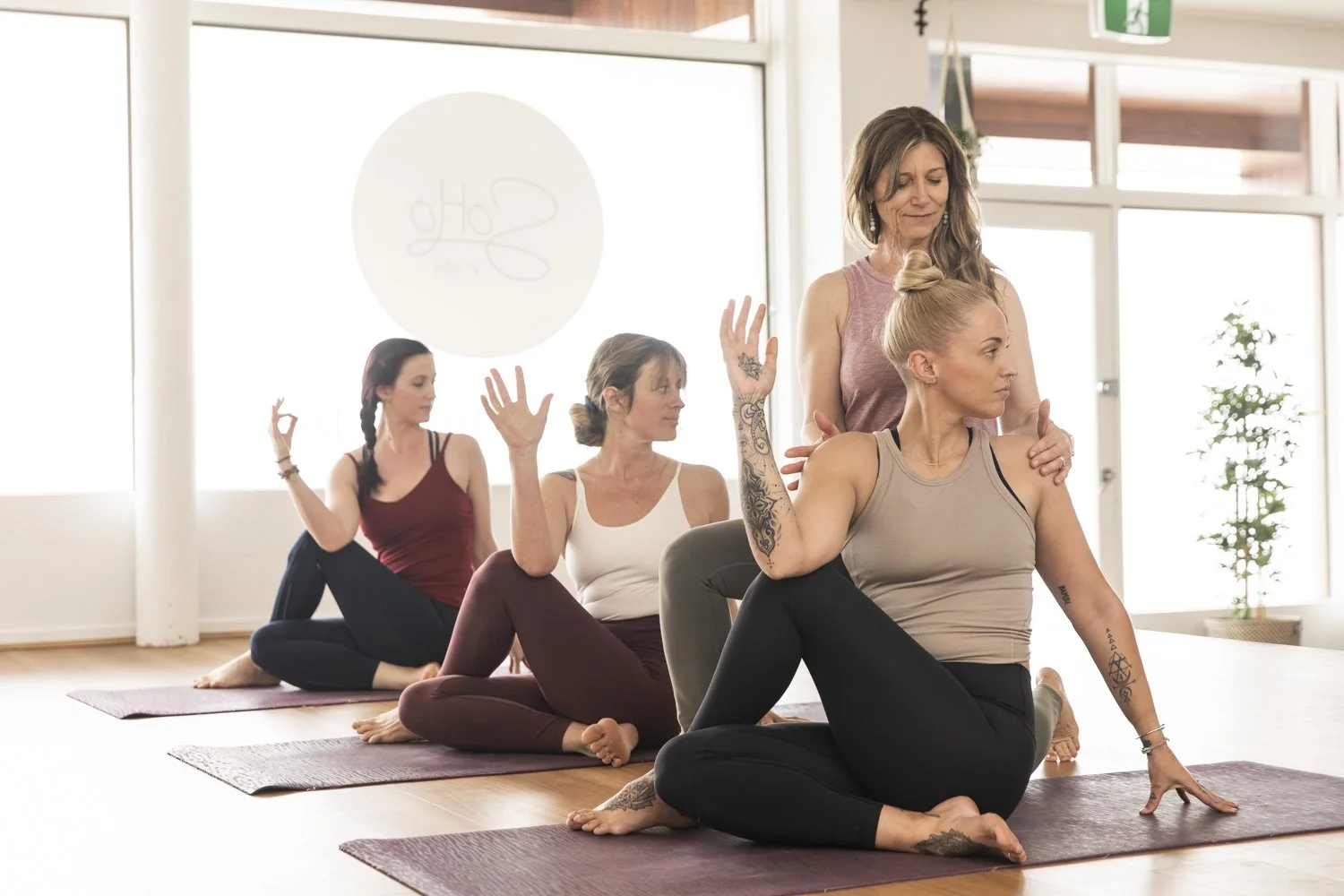
When you're physically present in practical sessions, you receive immediate, hands-on feedback from your teachers and peers. This real-time, constructive feedback and advice is crucial for developing both your yoga practice and your teaching skills.
Encouragement and support in a group setting also help build confidence and competence in a way that pre-recorded videos and written feedback can't. There’s simply no substitute for a hands-on assist to support you into a new pose, or an affirmation from a new friend when you lead your first sequence.
5. Improved cognitive function
The continuous learning required in a yoga teacher training program is a fantastic workout for your brain. It engages multiple cognitive functions, including memory, problem-solving, and critical thinking.
An in-person training adds another layer to this cognitive exercise. It demands active participation and quick, on-the-spot thinking. You're not just passively absorbing information; you're actively processing and applying it in real-time.
For example, learning to cue and teach ‘off-the-mat’ or provide modifications to students as needed requires dynamic, creative problem-solving. This kind of active engagement keeps the brain sharp and agile.
By choosing an in-person yoga teacher training, you're not just investing in a career; you're making a direct investment in your long-term mental and physical health. This holistic approach, combining the physical practice of yoga with the psychological benefits of enduring relationships and continuous learning, makes in-person training a powerful tool for overall well-being.
Find out more about our 200Hr face-to-face Vinyasa Yoga Teacher Training at sohoyoga.com.au/vinyasa-yoga-teacher-training.