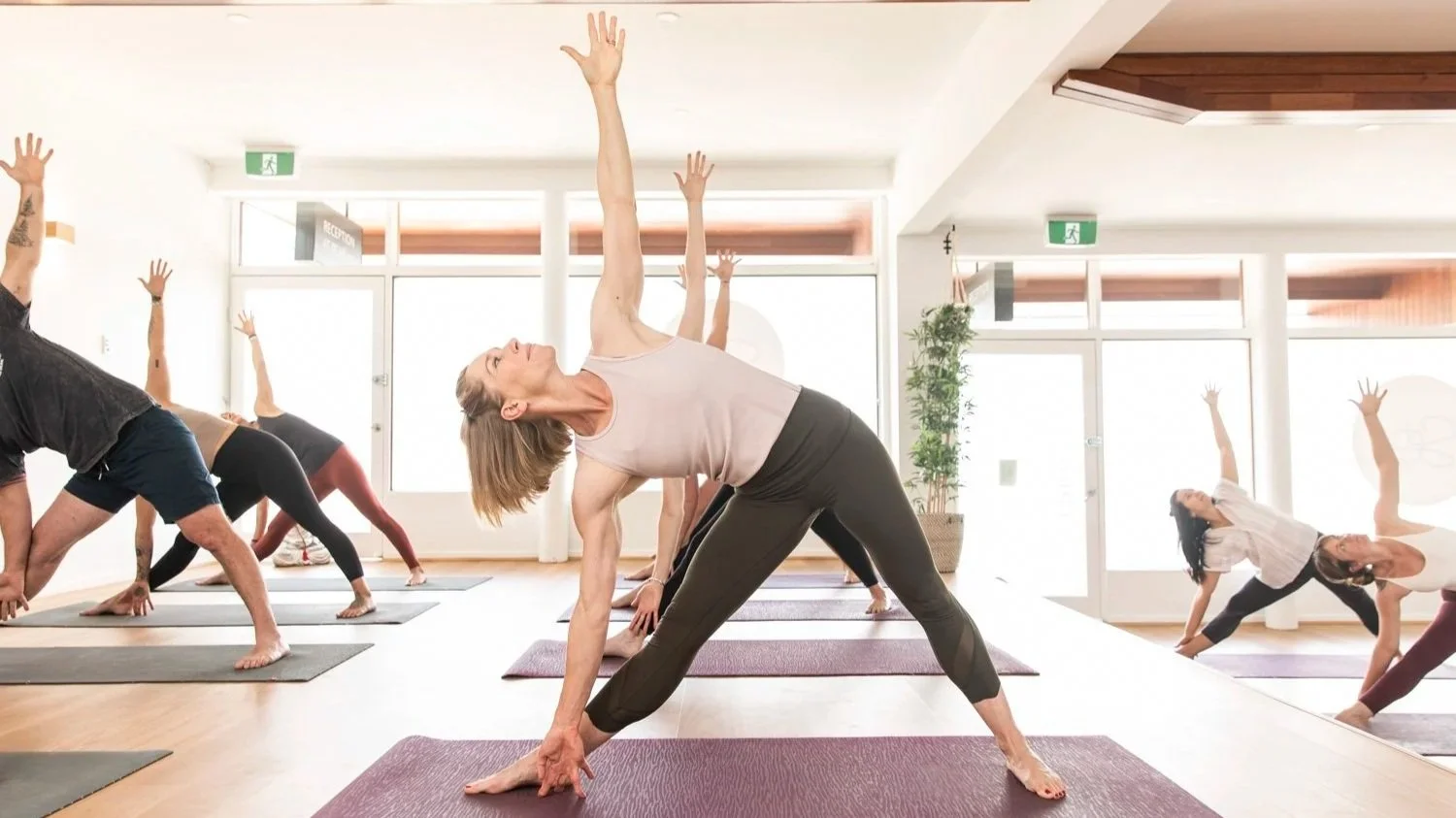
As I sit in our beautiful, light-filled Grange studio looking out at the leafy canopy, I often reflect on the incredible journey that thirty years of personal practice has taken me on. When I first stepped onto a yoga mat, the world felt a fraction slower than it does today in 2026. We weren't yet navigating the hyper-connected, always-on digital landscape that defines our current lives. Yet, the practice that sustained me then is the exact same practice that serves as the ultimate anchor for our community now: Vinyasa Yoga.

When people ask me what makes our Brisbane Yoga Studio a sanctuary, my answer always comes back to the intelligent application of flow. Vinyasa is not merely a sequence of physical exercises designed to make you sweat; it is a highly sophisticated, historically rooted methodology engineered to bring the mind and body back into absolute harmony.
If you have been searching for a yoga class that bridges the gap between ancient energetic tradition and modern stress management, I want to invite you into the world of Vinyasa.
The Roots of the Flow: A Brief History of Vinyasa
To truly appreciate a contemporary flow yoga class, we must understand where it comes from. The word Vinyasa is derived from two ancient Sanskrit roots: Nyasa, meaning "to place," and Vi, meaning "in a special way." When we string these concepts together, Vinyasa translates to "movement linked with breath, initiated with sacred intention."
While many fitness franchises treat flow as a modern western invention, its lineage is deeply traditional. The structural foundations of Vinyasa trace back to the legendary teacher T. Krishnamacharya in the early twentieth century, who recognized that a rigid, one-size-fits-all approach to yoga was ineffective. He believed that the practice must adapt to the individual, changing with the seasons of a person’s life, their health status, and even the time of day.
Krishnamacharya’s teachings evolved into Ashtanga Vinyasa Yoga under Sri K. Pattabhi Jois, which utilized fixed, demanding series of postures. As the practice evolved across the West and eventually down into our own corner of South East Queensland, it softened into the creative, intuitive, and mindfully informed Vinyasa Flow that we practice at SoHo today. We kept the traditional discipline of breath-synchronized movement but stripped away the rigid, injury-prone dogmatism to create a practice that honours the modern human frame.
The Modern Antidote: How Flow Applies to Society in 2026
We live in a society that is profoundly disembodied. We spend our days staring at screens, commuting along the inner-north corridors of Brisbane, and managing overwhelming mental loads. This constant cognitive stimulation keeps our sympathetic nervous system locked in a low-grade "fight or flight" response. We aren't being chased by predators, but our bodies process a flooded work inbox or a looming financial deadline exactly the same way.
This is why a traditional, static exercise routine isn't always enough to clear the mind. If you take a stressed, over-stimulated brain and place it on a treadmill or under a heavy barbell, you are often just layering more physical stress onto an already exhausted system.
Vinyasa Yoga applies to today's society by meeting your racing mind exactly where it is. The continuous, fluid nature of the class demands your full, undivided attention. You cannot think about your text messages or your household budget when you are actively balancing your weight, realigning your pelvis, and deep-breathing through a transition. The movement serves as a trapdoor for the analytical mind, forcing you out of your head and down into your physical body. It is a dynamic meditation, teaching you how to find a state of calm focus amidst constant motion.
The Multifaceted Benefits of a Dedicated Vinyasa Practice
When you commit to a regular Vinyasa practice at our Yoga Studio Brisbane location, the physiological and psychological transformations are profound. Because we prioritize anatomical safety and precision sequencing over superficial gymnastics, our students experience benefits that ripple into every area of their lives.
1. Cardiovascular Health and Joint Mobility
Unlike high-impact fitness training that can cause repetitive strain injuries, Vinyasa builds internal heat through low-impact, weight-bearing sequences. This fluid motion stimulates the production of synovial fluid, naturally lubricating your joints and reversing the morning stiffness caused by a sedentary desk job.
2. Postural Correction and Core Integration
Every transition in a flow class requires your core to stabilize your spine. As we move through variations of planks, warriors, and chest-opening postures, we systematically unravel the "forward slump" caused by laptop use, rebalancing your shoulders and relieving chronic neck ache.
3. Nervous System Down-Regulation
The true magic of Vinyasa lies in the breath. By maintaining a slow, controlled diaphragmatic breath through physical challenges, you stimulate the vagus nerve. This triggers your parasympathetic nervous system, lowering your heart rate, reducing cortisol, and paving the way for deep, restorative sleep.
Who Should Try Vinyasa Yoga?
One of the greatest misconceptions I hear as a senior facilitator is, "I am not flexible enough to try a flow yoga class." My response is always the same: saying you are too stiff to practice yoga is like saying you are too dirty to take a bath. Flexibility is the result of the practice, never the prerequisite.
Vinyasa Yoga is an exceptional match for:
Busy Corporate Professionals: If you are managing intense mental fatigue, the moving meditation of flow will help you cleanly disconnect from work and clear your mind.
Active Individuals and Athletes: If you love going to the gym or running around North Brisbane but find your muscles are tightening up, Vinyasa provides the perfect, active cross-training to protect your joints and expand your mobility.
Anyone Seeking Lifelong Longevity: If you want a movement practice that grows older with you, building real-world strength and balance without wearing out your body, this practice is designed for you.
At SoHo Yoga, we deliberately cap our class sizes to ensure our boutique Grange space remains an intimate, supportive sanctuary. You are never just a generic number on a gym floor; you are an individual guided by experienced educators who know your name and understand your unique physical journey.
Whether you are down-routing from Chermside, driving over from Windsor, or walking down the road in The Grange, your mat is waiting for you. Let us help you step off the treadmill of modern life and experience the transformative power of the flow.
See some of the common FAQs we receive at the studio below:
-
A typical class involves a mindfully sequenced series of postures that fluidly transition from one to the next, synchronised completely with your breathing. It includes centring breathwork, a dynamic warming phase, a continuous fluid movement sequence, and a final deep relaxation period.
-
Hatha focuses on static, individual postures with pauses in between, and Yin targets deep connective tissues through long, passive holds. Vinyasa is distinct because it prioritises continuous, rhythmic movement and smooth transitions, acting as a dynamic form of meditation.
-
Absolutely. Our Slow Flow classes are designed for complete beginners and our senior facilitators are highly skilled at offering progressive options and props. This ensures that a newcomer can practice at a pace that feels entirely safe, supportive, and accessible for their current fitness level.
-
To experience noticeable improvements in your joint mobility, core strength, and stress levels, we recommend attending a dedicated flow session 2 to 3 times per week. Consistency is the key to reshaping muscle memory and regulating the nervous system.
-
We recommend wearing comfortable, stretchable athletic clothing that allows your body to move freely. Our boutique Grange studio provides premium blocks, bolsters, and straps for your convenience. You are welcome to bring your own mat, or you can hire one at the studio.