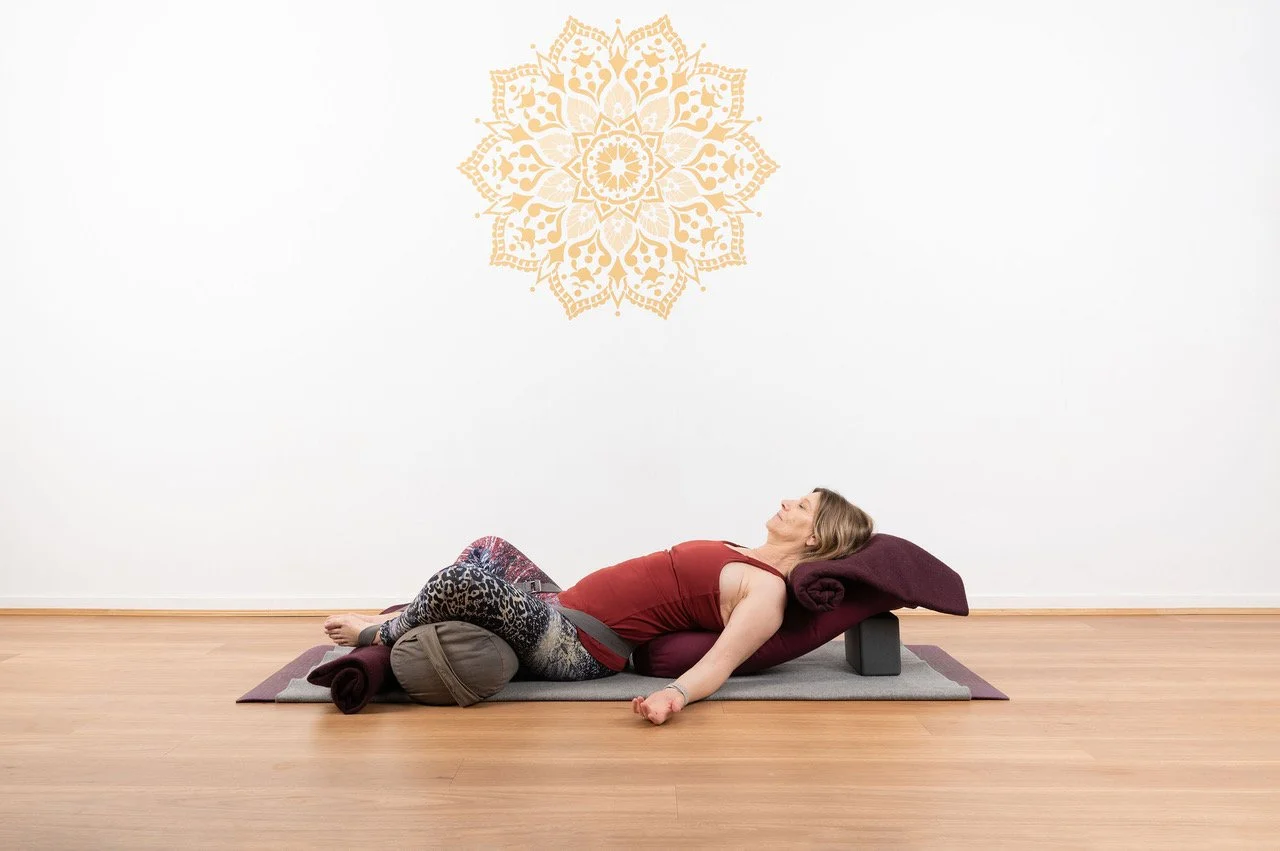
In our fast-paced world, finding moments of genuine calm can feel like a luxury. But what if you could tap into profound relaxation with minimal effort? Restorative yoga for beginners offers precisely that: a pathway to deep rest, healing, and a rejuvenated nervous system. It's an invitation to slow down, supported by props, and let go of tension.
If you're new to yoga or seeking a powerful antidote to stress and fatigue, this gentle practice is an ideal starting point.
What Makes Restorative Yoga Unique?
Forget about complex poses or strenuous stretches. Restorative yoga is fundamentally different from more active styles. Its primary purpose is to activate your parasympathetic nervous system – your body's "rest and digest" mode. This is achieved through:
Complete Support: Using props like bolsters, blankets, blocks, and straps, your body is fully supported in each pose. The props hold you, allowing your muscles to completely release.
Extended Holds: Poses are typically held for anywhere from 5 to 20 minutes. This duration gives your mind and body ample time to soften, surrender, and shed layers of tension.
Effortless Relaxation: The key is to feel no discomfort or strain. If you do, it's a sign to add more support or adjust your position until you are entirely at ease.
At SoHo Yoga, we understand the immense value of these practices. As Amanda Zdanowicz, the experienced owner and director of SoHo Yoga and a practitioner for 30 years, emphasizes:
“Teaching yoga is so much more than instructing the poses. An experienced teacher holds space for students to re-connect with their bodies and their breath and reclaim control of their physical and mental health.”
This philosophy extends directly to the mindful, supported practice of restorative yoga, guiding you towards profound inner calm.
Why Restorative Yoga is Perfect for Beginners
This gentle practice offers accessible and profound benefits, especially if you're just starting out:
Combat Chronic Stress: It's incredibly effective at reducing the physiological effects of stress, helping to lower stress hormones and calm an overactive mind.
Improve Sleep: By deeply relaxing the body and mind, restorative yoga sets the stage for more restful and rejuvenating sleep.
Gentle on Joints and Muscles: With full support from props, there’s no need for flexibility or strength, making it ideal for everyone, including those with injuries, chronic pain, or limited mobility.
Cultivate Mindfulness: The long, quiet holds provide a unique opportunity to practice presence, observing your breath and sensations without judgment.
Release Deep Tension: Prolonged support allows deep-seated muscular and energetic tension to melt away, often in areas you didn't even realize you were holding stress.
Your First Restorative Sequence: 3 Supportive Poses
You don't need a fully stocked yoga studio to begin. Improvise with household items: use a firm pillow or rolled up blanket for a bolster, thick books for blocks, and towels for blankets.
1. Supported Reclined Bound Angle Pose (Supta Baddha Konasana)
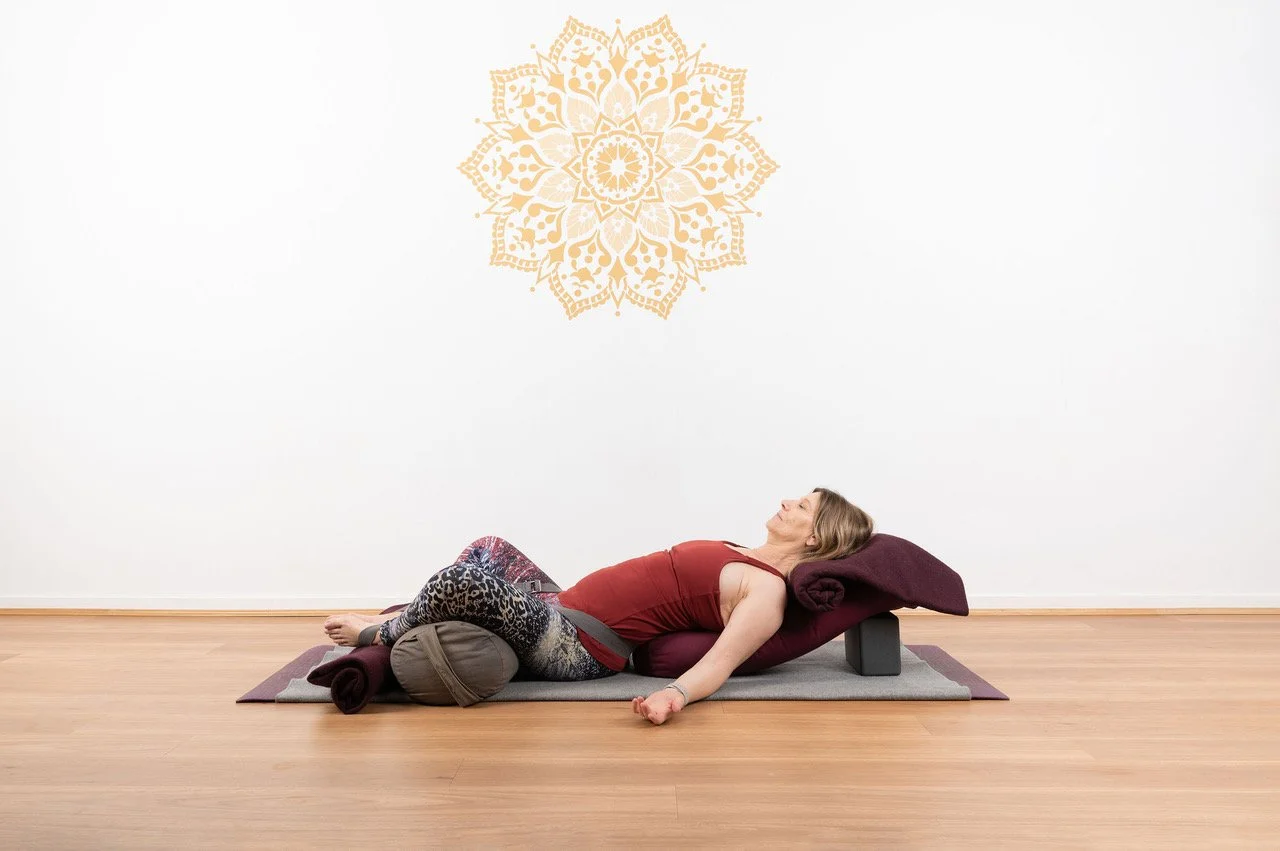
This heart-opening and hip-releasing pose is wonderfully soothing.
Setup: Place a bolster (or firm pillow/rolled blanket) lengthwise down your mat. Sit with your sacrum (lower back) touching one end of the bolster. Bring the soles of your feet together and let your knees fall open to the sides.
The Pose: Gently recline back over the bolster, allowing your head to rest comfortably. Place blocks or folded blankets under your outer thighs/knees for support so they don't hang in the air. Let your arms rest out to the sides, palms up.
Focus: Feel your chest gently open and the inner groins soften. Allow your breath to deepen and soften your belly.
Hold: 5-10 minutes.
2. Supported Twist (Supine Spinal Twist)
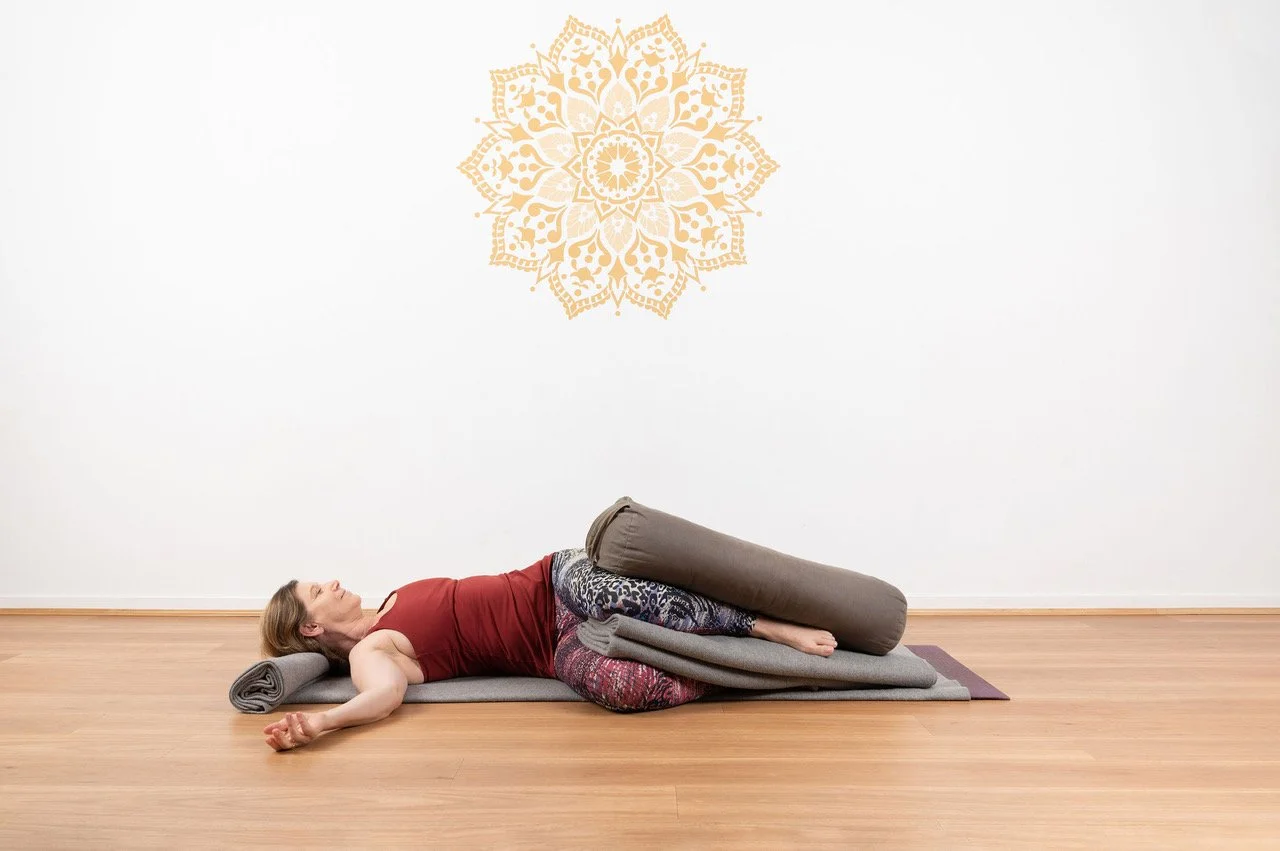
A gentle twist to release tension in the spine and calm the nervous system.
Setup: Lie on your back. Bring your knees to your chest, then drop both knees to one side (e.g., to the right).
The Pose: Place a bolster or several folded blankets under your knees and shins to support them completely. Extend your arms out to a "T" shape, palms up. You can turn your head in the opposite direction of your knees if comfortable, or keep it neutral.
Focus: Feel the gentle release in your spine and the support of the props. Let your breath expand into your back.
Hold: 5-7 minutes per side.
3. Savasana with Eye Pillow (Corpse Pose)
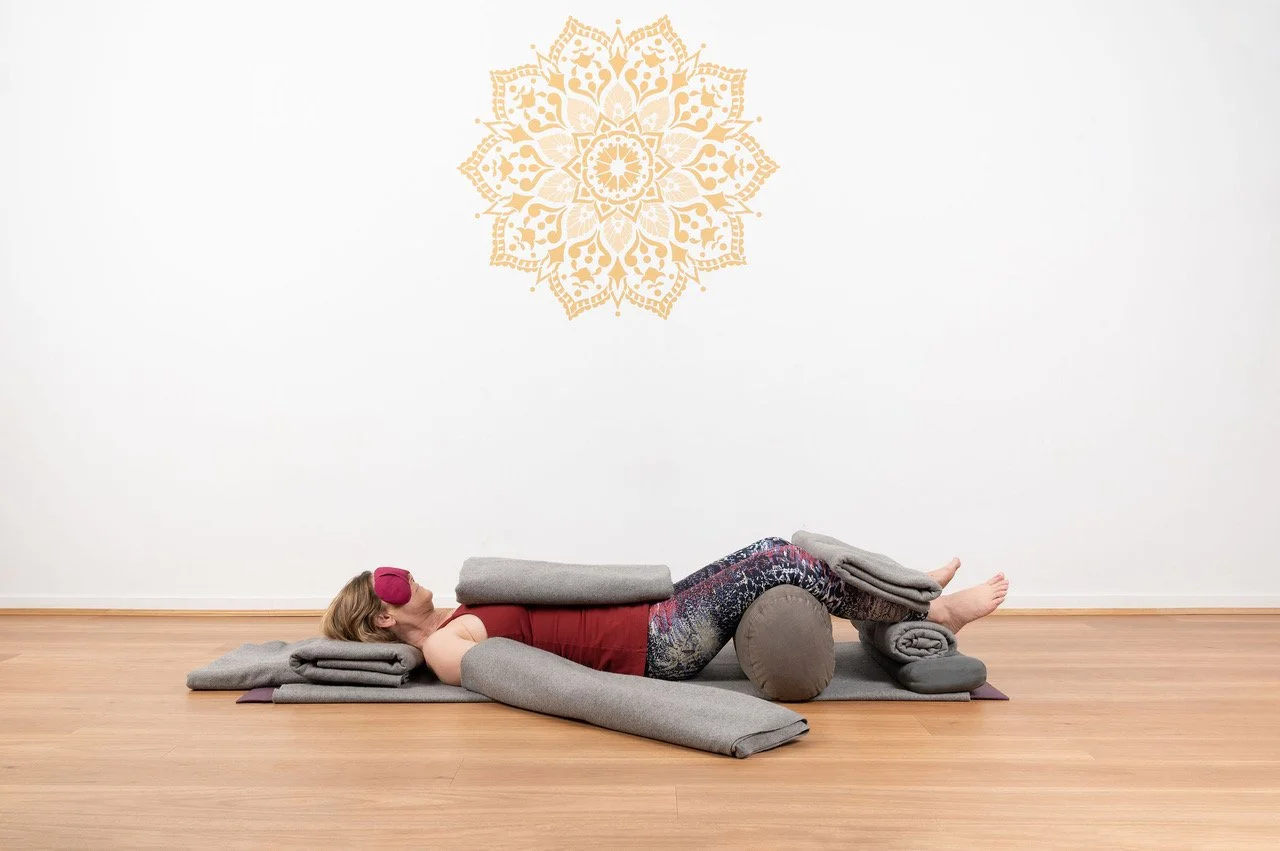
The ultimate pose of rest, enhanced with comfort.
Setup: Lie flat on your back, legs extended and slightly apart, arms by your sides with palms up.
The Pose: Place a rolled blanket under your knees for lower back comfort. Place a warm eye pillow or a small, folded cloth over your eyes. Ensure your head feels centred and fully supported.
Focus: Allow your entire body to become heavy and sink into the floor. Notice the darkness and stillness. Simply breathe and rest.
Hold: 10-20 minutes.
Essential Tips for Your Practice
Listen to Your Body: The primary rule is comfort. Adjust props until there's no pulling, tugging, or strain.
Create Your Sanctuary: Dim the lights, put on soft, calming music, and ensure you won't be disturbed.
Stay Warm: Cover yourself with a blanket. As your body relaxes, your core temperature can drop.
Be Patient with Your Mind: It's natural for thoughts to arise. Acknowledge them, and gently guide your awareness back to your breath or the feeling of support.
Transition Slowly: After each pose, especially Savasana, roll gently onto your side and pause for a few breaths before slowly pressing yourself up.
Restorative yoga for beginners is a profound journey into self-care, offering a sanctuary of stillness in your busy life. It's a practice that truly meets you where you are, inviting deep healing and peace.
Eager to explore more? Discover our dedicated Restorative Yoga classes in Brisbane and experience this transformative practice firsthand: Restorative Yoga Brisbane.