
Thinking about starting yoga but feeling a little intimidated? You're not alone! The world of yoga offers incredible physical and mental benefits, and the best part is, you don't need to be flexible or have any prior experience to begin. Your yoga journey starts exactly where you are.
This guide is designed to demystify yoga classes beginners, helping you confidently unroll your mat for the very first time.
Why Start with Yoga Classes Beginners?
Choosing a dedicated beginners class or course is the smartest way to start. These classes are specifically designed to build a strong, safe foundation for your practice.

Embracing the practice of yoga can be the catalyst for positive change. As Amanda Zdanowicz, the owner and director at SoHo Yoga and a senior teacher registered with Yoga Alliance and Yoga Australia, states:
“Yoga is so much more than the physical postures... At SoHo we weave breathwork, meditation and philosophy into our classes so you can take the principles of your yoga practice and apply them directly to your daily life—giving you greater presence and resilience, both on and off the mat.”
This emphasis on using yoga to improve your day-to-day life is exactly what a beginner class aims to achieve.
What to Expect in Your First Yoga Classes Beginners
If you're unsure what happens once you walk into the studio, here is a typical structure for a beginners class:
Arrive Early: Aim for 10-15 minutes before class starts. This gives you time to check in, chat with the teacher about any injuries or concerns, and find a comfortable spot (often at the back, where you can easily follow others).
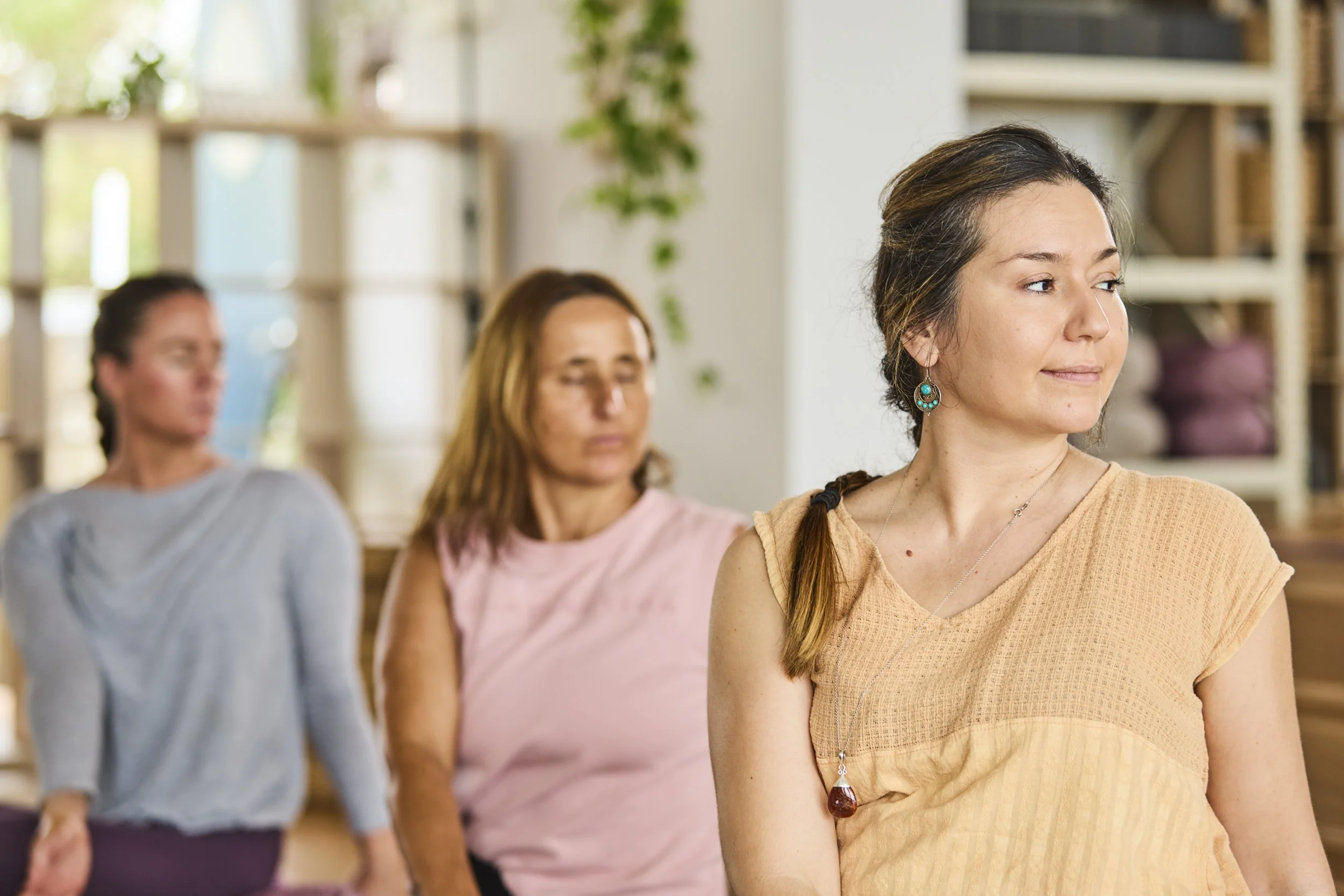
Settle In: The class often begins with a few minutes of quiet sitting or gentle meditation, allowing you to set an intention and transition your focus inward. You might start with a simple breathing exercise.
Warm-Up: Gentle movements are used to prepare the body, especially the spine, hips, and shoulders, for the deeper poses.
The Main Practice: The teacher will guide you through foundational poses like Downward-Facing Dog, Warrior II, and basic standing balances. The pace will be slow, allowing the teacher to explain the proper alignment and offer modifications using props like blocks, blankets, and straps.
Wind Down: The class ends with floor-based stretches and gentle twists to cool the body down.
Savasana (Final Rest): Almost every yoga class concludes with Savasana (Corpse Pose), where you lie on your back for deep relaxation. This final rest is a non-negotiable part of the practice, allowing the benefits of the poses to fully integrate into your body and mind.
Quick Tips for Your First Class
What to Wear: Comfortable, stretchy clothing that allows you to move freely.
What to Bring: A water bottle and perhaps a small towel. Mats and props are usually provided by the studio.
The Golden Rule: Listen to your body. Discomfort is normal; pain is your cue to back off or take a rest in Child's Pose.
Choosing Your Beginner Class Style
While many studios offer a dedicated "Beginners Yoga Course," you can also look for these beginner-friendly styles:
Hatha Yoga: Often the best starting point. Hatha classes are slower-paced and focus on holding foundational postures for several breaths, giving you time to learn proper technique.
Slow Flow or Gentle Vinyasa: If you prefer continuous movement, a Slow Flow class links breath to movement but at a much more accessible pace than a regular Vinyasa class.
Yin Yoga: A meditative style where floor poses are held for several minutes to target deep connective tissues. It requires patience and stillness but very little muscle effort.
No matter which style you choose, simply showing up is the most important step. Yoga classes beginners are designed to meet you where you are, fostering a practice that brings not only physical benefits but also a sense of peace and mental clarity.
Ready to find the right class for you? Learn more about our specialized beginners' offerings and courses here: Beginners Yoga Brisbane.